

.png)


Throughout 2025, we have supported destinations, small businesses, and public sector partners to move beyond sustainability towards approaches that actively restore ecosystems and the interconnected social, cultural, and economic systems they support, while strengthening local economies and community ownership of tourism.
As 2025 comes to an end, we want to share how we understand regenerative tourism in practice, and how this approach is already being applied through the projects we deliver across different regions.
What Regenerative Tourism Really Means
Regenerative tourism builds on the foundations of sustainability but takes them a step further. While sustainable tourism aims to minimise negative impacts, regenerative tourism focuses on restoring and strengthening the living systems that support life, nature, culture, and communities.
It is not simply about “doing more good” or “leaving a place better than you found it.” Regeneration represents a fundamental shift in mindset. It asks us to see destinations as living, interconnected systems where tourism becomes part of nature’s ongoing process of renewal and balance.
This approach is about participating in the continuous flow of life, designing tourism that nurtures the conditions under which both people and ecosystems can thrive together.
From Sustainability to Regeneration
Sustainability and regeneration are not opposites; they exist along the same path. Regeneration grows out of sustainability, expanding its purpose from maintaining balance to restoring vitality and fostering resilience.
The regenerative journey begins with understanding current practices, embedding sustainability across the operations, and demonstrating commitment through credible certification. From there, it’s about reimagining tourism as a collaborative, place-led process that strengthens local relationships and living systems.
Instead of asking, “How can we minimise impact?”, regenerative tourism asks, “How can we help this place express its full potential for life?”
.jpg)
A Living System Perspective
Regenerative tourism recognises that people, culture, economy, and environment are all connected. When one part of this living system suffers, the whole system weakens. But when one part is restored, the entire system becomes more resilient.
By viewing tourism through this lens, businesses can design experiences that contribute to the ongoing health of the whole system, supporting biodiversity, empowering communities, and celebrating local identity as interdependent processes.
.jpg)
What Makes Tourism Regenerative?
Regenerative tourism is not a checklist of actions; it is a living philosophy. Each destination and business will take a unique path, shaped by its people, landscapes, and stories. Yet several guiding principles define regenerative practice:
-
Place-based design: Root strategies in the natural and cultural identity of the destination.
-
Community led: Co-create tourism with local people so that it strengthens their livelihoods and sense of belonging.
-
Restoration and renewal: Contribute to the vitality of ecosystems, cultural heritage, and social well-being.
-
Meaningful connection: Encourage visitors to engage with empathy, respect, and reciprocity.
-
Adaptive learning: Continuously evolve with the needs of the community and environment.
Tools and Steps for Businesses
For small and medium-sized tourism enterprises, the regenerative journey begins with awareness and intention:
-
Start with sustainability: Measure your current impact and identify where to improve environmental and social performance.
-
Gain certification: Use credible schemes with international recognition such as Travelife, Green Tourism, or the Good Travel Seal to build trust and transparency.
-
Collaborate locally: Work with communities, artisans, and farmers to design experiences that reflect shared values and purpose.
-
Educate visitors: Encourage guests to participate in meaningful exchanges and contribute to the life of the place.
-
Track and share progress: Use data and storytelling to show how tourism can renew systems and strengthen resilience.
At Acorn, we support businesses and destinations through this process with practical tools, clear benchmarks, and place-specific strategies that turn regenerative principles into achievable actions.
Stories of Regeneration in Action
Across the world, destinations and tourism businesses are already applying regenerative principles in ways that restore ecosystems, strengthen communities, and deepen connections between visitors and place. These examples show that regeneration is not a single intervention, but an ongoing relationship between people, nature, and culture.
Playa Viva, Mexico: Restoring coastal ecosystems through reforestation and community-led health and education initiatives.
.jpg)
Located on Mexico’s Pacific coast, Playa Viva applies regeneration by actively restoring the land and strengthening local well-being. Operating off-grid with renewable energy, the resort combines ecosystem restoration, including reforestation and estuary regeneration, with community-led health and education initiatives. Guests are invited to participate in these efforts, transforming the visitor experience from passive consumption into meaningful contribution and reciprocity.
Tiger Mountain Pokhara Lodge, Nepal: Integrating conservation and hospitality so that nature, culture, and livelihoods flourish together.
.jpg)
At Tiger Mountain Pokhara Lodge, regeneration is expressed through the integration of conservation, culture, and hospitality. The lodge works closely with surrounding communities, sources food locally, supports schools and health services, and embeds environmental stewardship into daily operations. By starting with manageable actions and building over time, the lodge demonstrates how regenerative practice grows from strong foundations and local relationships.
Love Wānaka & Queenstown, New Zealand: Building visitor-giving systems that link tourism directly to local restoration and climate resilience.
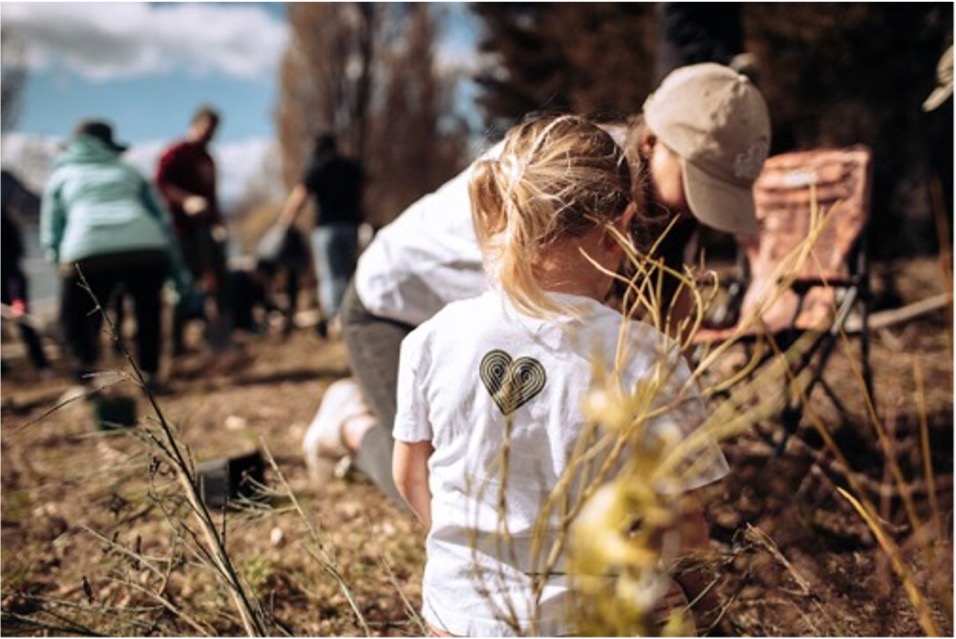
In Wānaka and Queenstown, tourism businesses have collaborated to create visitor-giving systems that directly fund local regeneration projects. Through the Love Wānaka and Love Queenstown Funds, visitors are invited to contribute to environmental restoration, climate resilience, and community initiatives. This model embeds care for place into the tourism economy, turning visitors into active participants in local renewal.
Grafitour in Comuna 13 Medellin - Colombia: Using art, mobility, and storytelling to reconnect people with place and transform community identity.

In Comuna 13, projects such as Grafitour show how regeneration can be social and cultural as much as environmental. Tourism here is led by local residents, using art, storytelling, and mobility infrastructure to reconnect people with place and reclaim community identity. Visitor experiences are shaped by local voices, creating dignity, inclusion, and long-term social value.
Why Regeneration Matters Now
As tourism adapts to global challenges, from climate change to biodiversity loss and social inequality, there is a growing understanding that sustainability alone is not enough. Regeneration provides a deeper framework for resilience, one that aligns economic purpose with ecological and cultural vitality.
By embedding regenerative principles into planning and operations, destinations can nurture living systems that support both people and planet. This approach ensures that tourism contributes to the continuous renewal of life, not just its preservation.
Regeneration in Practice: Supporting the Life of Place
Through training, mentoring, sustainability assessments, and certification support, we have helped tourism SMEs understand their role within wider living systems. Our work focuses on embedding credible sustainability standards, improving resource management, and strengthening local supply chains so that tourism activity contributes positively to local environments, communities, and economies.
In São Tomé and Príncipe, through the WACA+ Project funded by the World Bank, we supported national tourism teams to improve how visitor data is collected, analysed, and used. Strengthening local capacity to interpret visitor behaviour, seasonality, and pressure points allows tourism planning to better align with environmental limits and community priorities, particularly in fragile island and coastal ecosystems.
In the North York Moors National Park (UK), we delivered a sustainability scan with tourism businesses to assess current practices and identify practical, place-sensitive improvements. This helped SMEs understand how their operations interact with protected landscapes, local communities, and destination resilience.
In the Falkland Islands, we supported tourism businesses through sustainability audits and tailored guidance suited to a remote and environmentally sensitive destination. The focus was on reducing pressure on fragile ecosystems and aligning tourism activity with conservation priorities and local capacity.
In Jordan, our destination planning and product development work supported tourism experiences rooted in cultural landscapes and local enterprise, strengthening local supply chains and aligning visitor experiences with heritage conservation and place identity.
At sector level, Acorn also contributes to the enabling conditions for regenerative tourism by supporting sustainability leadership within professional bodies, including our role in leading the sustainability working group at the Tourism Management Institute (TMI). This work helps shape shared understanding, guidance, and good practice for tourism professionals, strengthening the foundations needed for regenerative approaches to be adopted consistently across destinations.
Together, these examples show how regeneration is applied in practice at business, destination, and sector level: not as a label, but as a pathway that aligns tourism with the ongoing health of people, culture, and nature.
Much of this work is not about claiming regenerative outcomes, but about strengthening the sustainability, capacity, and governance foundations without which regenerative tourism cannot exist.
Looking ahead, Acorn Tourism will continue to support destinations and SMEs to move from managing impact to actively contributing to the life of place, using data, collaboration, and locally grounded strategies to guide that journey.
If you are exploring how regenerative principles can be applied in your destination or business, we would be glad to support you in shaping a practical, place-led approach.
Related

We worked with three very different rural communities, all with exceptional biodiversity and all of which had been severely affected by the conflict in Colombia. Together with E3 Group in Colombia and RHS Kew Gardens, we developed tourist routes that promote forest protection and peacebuilding through community-based ecotourism.
Comments
Nobody has commented on this post yet, why not send us your thoughts and be the first?

